Key points
- The Waveshare ESP32-S3 1.75C costs $50 and is officially sanctioned by Meta for Muse Gadget development.
- Initial out-of-box functionality was limited, with slow responses, no audio output and a single static avatar.
- The author used Claude Code to reprogram the device, adding features like smart home control and camera viewfinder capabilities.
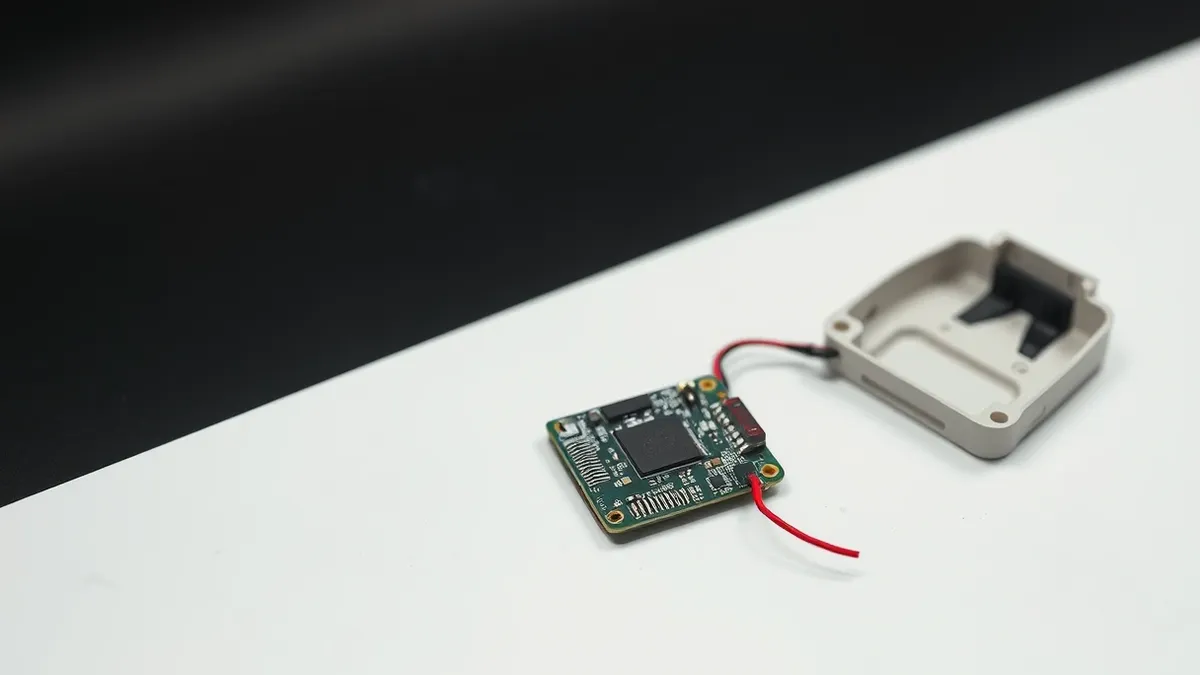
The Verge AI reported that a developer constructed a functional AI pendant for $50 using Meta’s open-source Muse code, arguing that the learning experience outweighed the cost of Meta’s upcoming commercial hardware.reported This build relies on the Waveshare ESP32-S3 1.75C, a 1.75-inch touchscreen computer pendant drop-shipped from China. Meta officially lists this device as one of its first suggestions for building a “Muse Gadget,” which uses the company’s open-source code and tokens to connect directly to the Muse AI cloud. The device lacks cameras or a 5G cellular radio found in the commercial Muse Charm, but it does feature push-to-talk functionality and cute avatars.reported
The claim
The author asserts that the $50 Waveshare device can replicate many features of the commercial Muse Charm, including acting as a pocket watch and a remote camera viewfinder.reported The report states that the device can theoretically control smart home gadgets, although this requires significant additional coding effort. The author decided against purchasing Meta’s holiday-season Muse Charm, preferring the lower-cost alternative. The build process involved paying $50 for the hardware and then using external AI tools to configure the software stack. The resulting device connects to the Muse phone app and utilises Meta’s cloud infrastructure for AI processing.
The response
The initial experience with the device was described as “pretty useless” upon arrival, according to The Verge AI.reported Setup required plugging the device into a PC and using Claude to interpret Meta’s GitHub repository. Even after pairing with the Muse app and inserting API keys, the system misinterpreted audio inputs as transcriptions rather than commands. Responses were notably slow, and the device did not provide audio output. The screen displayed only a few words at a time, forcing users to check their phones for full messages. Meta’s build included only a single “Jolly” avatar that remained static, and it failed to automatically discover smart home devices like Amazon Echo or Google Home.
The bottom line for teams
The material suggests that Meta’s open-source reference implementation requires substantial developer intervention to achieve basic usability. While the hardware is officially sanctioned, the software experience out-of-the-box is fragmented. The author notes that sessions with Claude Code filled in “almost all those holes,” enabling features like smart home control and improved interaction. However, the lack of a remote shutter button limited the utility of the video streaming sample app provided by Meta engineers Anant Narayanan and Jeremy Payne. The device remains dependent on a companion phone app for full context.
What the paper shows
The report demonstrates that Meta’s Muse Gadget framework, while accessible via open-source code, delivers a minimal initial feature set. The Waveshare ESP32-S3 1.75C serves as a viable hardware base, but the software integration is incomplete.reported Key limitations include the absence of audio feedback, slow response times and a lack of automatic smart home discovery. The single static avatar offers limited engagement compared to the commercial product. The study highlights that achieving functional parity with Meta’s commercial Muse Charm requires significant custom programming, primarily using AI-assisted coding tools like Claude Code. The device’s utility as a remote viewfinder and smart home controller is theoretical until these code injections are applied.
Why it matters
- Evaluators can test Meta’s Muse AI cloud integration using low-cost, off-the-shelf hardware rather than waiting for commercial devices.
- The reliance on external AI tools like Claude Code to fix reference implementations suggests potential gaps in Meta’s developer documentation or SDK maturity.
- The lack of audio output and slow response times in the reference build may indicate performance bottlenecks in the open-source code path versus the commercial app.
- Developers must account for significant additional engineering effort to enable basic features like smart home discovery, impacting time-to-market for custom Muse Gadgets.
Topics: Meta, Muse AI, open-source, hardware development, ESP32
Updated
Ask the article
Local keyword search of this article; no generated answers.Did this article give you the evidence you needed?
Your choice stays on this device. No public tally.Questions readers ask
What hardware was used to build the DIY Muse Charm?
The author used a Waveshare ESP32-S3 1.75C, a 1.75-inch touchscreen computer pendant that costs $50.
Did the device work immediately after setup?
No, the device was described as useless initially, with slow responses, no audio output and misinterpreted commands.
How were the missing features added?
The author used Claude Code to reprogram the device, filling in holes for smart home control and other functionalities.
Reading receipt
- The Waveshare ESP32-S3 1.75C costs $50 and is officially sanctioned by Meta for Muse Gadget development.
- Initial out-of-box functionality was limited, with slow responses, no audio output and a single static avatar.
- The author used Claude Code to reprogram the device, adding features like smart home control and camera viewfinder capabilities.