Key points
- France attributed the attack on supermarket refrigerators to hackers linked to the Islamic Revolutionary Guard Corps.
- The intrusion involved using default passwords to alter temperature controls, causing some units to catch fire.
- Experts suggest this incident may be connected to a broader wave of defrosting hacks across Europe.
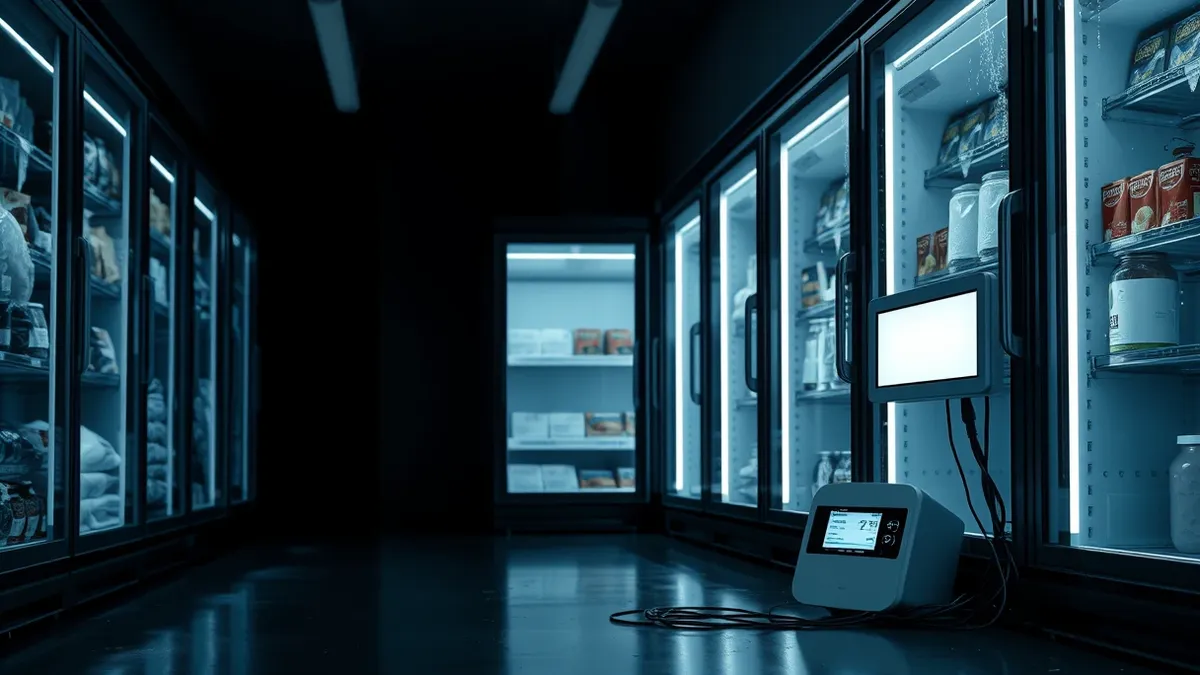
France has formally attributed a recent cyber-attack on supermarket refrigeration units to hackers operating under the Islamic Revolutionary Guard Corps, according to reporting by The Guardian.reported This designation marks the first official implication of Iran in this specific type of infrastructure disruption.French officials say Iranian hackers broke into supermarket fridges, causing fires and food waste.France attributes a cyber-physical attack on retail refrigeration to the IRGC, citing default credential exploitation.
Evidence: reported
The French fridge hacks were relatively unsophisticated. An AI-enabled attack would raise the stakesaifleet-guardian
The claim
The attack resulted in refrigerators having their temperatures turned up significantly, with some units catching fire. Supermarket employees were forced to discard large quantities of spoiled meat and melted ice cream in the hours following the incident. French authorities described the event as an act of unprecedented scale and aggression, promising Europe-wide sanctions against those responsible.
The response
Rafe Pilling, a senior director at cybersecurity firm Sophos, characterised the attack as relatively unsophisticated. He noted that hackers used default passwords to access the fridge controls, a method consistent with known Iranian capabilities. Pilling stated that the attacks themselves were not particularly complex, contrasting with more advanced cyber operations.
The bottom line for teams
The French announcement presumes a link between this incident and a wave of rogue defrosting hacks across Europe. While previous attacks on Israeli food plants and US military bases have not been officially attributed to Iran, this case establishes a clear state-level connection. The disruption highlights vulnerabilities in industrial control systems.
What the paper shows
The reporting indicates that the primary vector was weak authentication, specifically default passwords. The results included physical damage to equipment and significant food waste. The stated limitation is that while the French government attributes this specific attack to the IRGC, other similar incidents remain unattributed or under investigation. The connection to broader European hacks is a presumption, not a confirmed fact.
Why it matters
- The use of default passwords demonstrates that basic hygiene failures remain a critical entry point for state-sponsored actors.
- Attribution to the IRGC aligns with the stated Iranian motive to project power and signal political displeasure.
- The physical consequences, including fires, illustrate the tangible impact of cyber-attacks on retail operations.
- France promised Europe-wide sanctions, indicating a potential policy response to the attributed attack.
Topics: cyber-physical systems, Iran, IoT security, attribution, retail infrastructure
Updated
Then / now / next
Cyber-attacks on industrial freezers in Israel and the US were suspected but unattributed.
France has officially linked a similar attack on supermarket fridges to the Iranian IRGC.
Watch for the imposition of Europe-wide sanctions and further attribution of related hacks.
Story timeline
- Then Cyber-attacks on industrial freezers in Israel and the US were suspected but unattributed.
- 09 Nov 2026 The French fridge hacks were relatively unsophisticated. An AI-enabled attack would raise the stakes
- Now France has officially linked a similar attack on supermarket fridges to the Iranian IRGC.
- Next Watch for the imposition of Europe-wide sanctions and further attribution of related hacks.
The strongest doubt
Counterpoint from the sources
The attacks were described as not particularly complex, relying on basic security failures rather than advanced exploitation techniques.
For readers
Policy
- France promised Europe-wide sanctions in response to the attributed cyber-attack.
Business
- Retailers face physical damage and inventory loss from compromised temperature controls.
Researchers
- The incident highlights the risk of default credentials in industrial IoT devices.
Ask the article
Local keyword search of this article; no generated answers.Did this article give you the evidence you needed?
Your choice stays on this device. No public tally.Questions readers ask
Did Iran officially claim responsibility for the French fridge hacks?
No, France attributed the attack to hackers operating under the Islamic Revolutionary Guard Corps, but Iran has not claimed responsibility.
How did the hackers gain access to the refrigerator controls?
According to Sophos, the hackers used default passwords to access the systems, indicating a lack of basic security configuration.
Are other European freezer hacks linked to this incident?
There is a presumption of a link between the French attacks and other defrosting hacks across Europe, but this has not been officially confirmed.
Reading receipt
- France attributed the attack on supermarket refrigerators to hackers linked to the Islamic Revolutionary Guard Corps.
- The intrusion involved using default passwords to alter temperature controls, causing some units to catch fire.
- Experts suggest this incident may be connected to a broader wave of defrosting hacks across Europe.