Key points
- Greater Geelong trialled AI cameras on two street sweepers.
- The system detected 1,600 potholes since August 2025.
- Officials plan to expand the tech to garbage trucks.
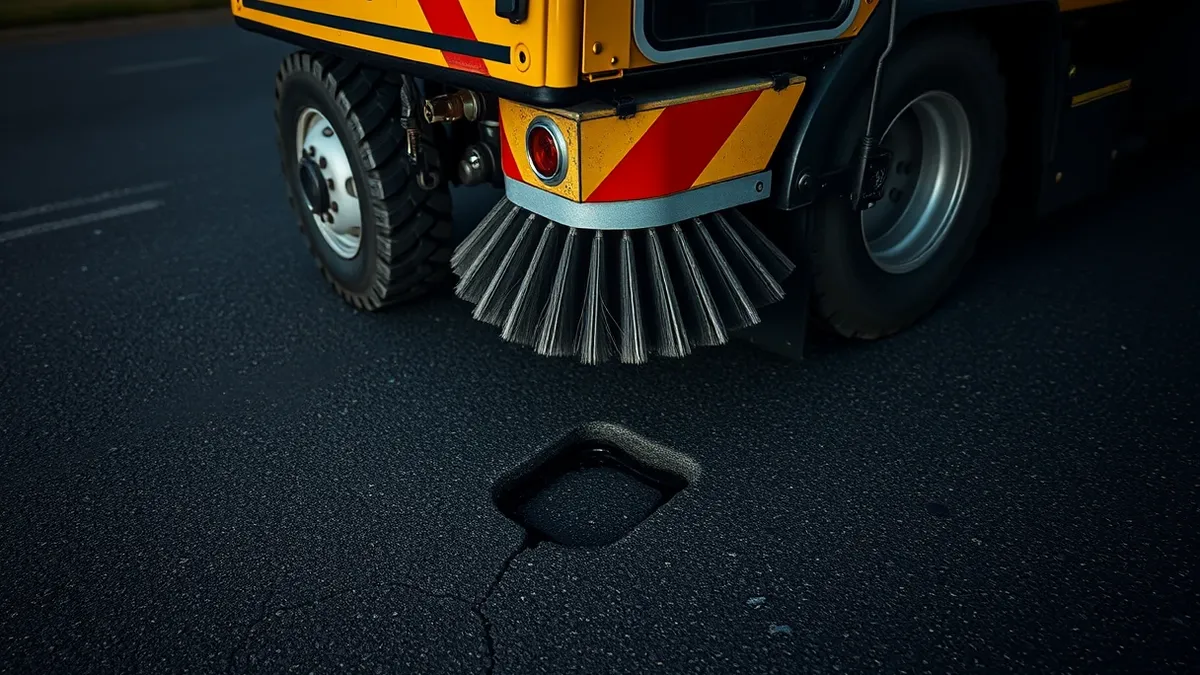
The City of Greater Geelong claims it is the first Victorian council to deploy artificial intelligence for detecting and measuring road potholes. The program aims to save money by enabling precise repairs.The council uses cameras on trucks to find road holes automatically.
The claim
Council leaders state the technology photographs road surfaces as vehicles drive over them. The system sends images to road crews along with width and depth measurements. This data allows workers to calculate the exact materials needed for repairs. Mayor Stretch Kontelj reported the $7,000 trial began in August 2025.reported The initiative has already detected 1,600 potholes, according to the outlet.reported
The response
Cr Kontelj argued that early intervention prevents holes from growing larger and becoming more expensive to fix. He stated the AI provides exact dimensions, enabling cost-effective responses. Senior analyst Alexander Hardiman expressed excitement about harnessing AI to improve service provision and ease workers' jobs.
The bottom line for teams
The council says the program would be rolled out on two road sweeper trucks. Officials hope to expand the project to the city's fleet of garbage trucks and other council vehicles. They also aim to use the system for detecting road sign faults, faded line markings, roadside rubbish, hazards and missing drain lids.
What the paper shows
The report describes a trial using AI cameras on street sweepers to detect potholes. The results show 1,600 detections since August 2025. The system provides width and depth measurements to help crews calculate repair materials. The council claims this allows for early intervention and cost savings. No specific accuracy metrics or technical limitations are stated in the source material.
Why it matters
- Model evaluators can observe the application of computer vision in municipal infrastructure monitoring.
- The reported detection count of 1,600 potholes provides a baseline for system output volume.
- Expansion plans to garbage trucks suggest potential for broader fleet integration.
- Cost savings claims are based on the ability to repair smaller holes earlier.
Topics: computer vision, municipal tech, infrastructure, AI deployment
Updated
Ask the article
Local keyword search of this article; no generated answers.Did this article give you the evidence you needed?
Your choice stays on this device. No public tally.Questions readers ask
How many potholes did the AI detect?
The system detected 1,600 potholes since the trial began in August 2025.
What is the cost of the trial?
Mayor Stretch Kontelj stated the program cost $7,000.
Connected stories
Reading receipt
- Greater Geelong trialled AI cameras on two street sweepers.
- The system detected 1,600 potholes since August 2025.
- Officials plan to expand the tech to garbage trucks.
Still open: What is the false positive rate of the AI detection system?
Still open: How does the system perform in adverse weather conditions?