Key points
- OpenAI published a National Community Compact and a Compute Campus Policy Blueprint to outline its commitments to local areas.
- The company states it will bear the full cost of electricity and necessary grid infrastructure upgrades for its facilities.
- OpenAI claims it plans to prioritise closed-loop cooling systems to minimise water consumption at its data centre sites.
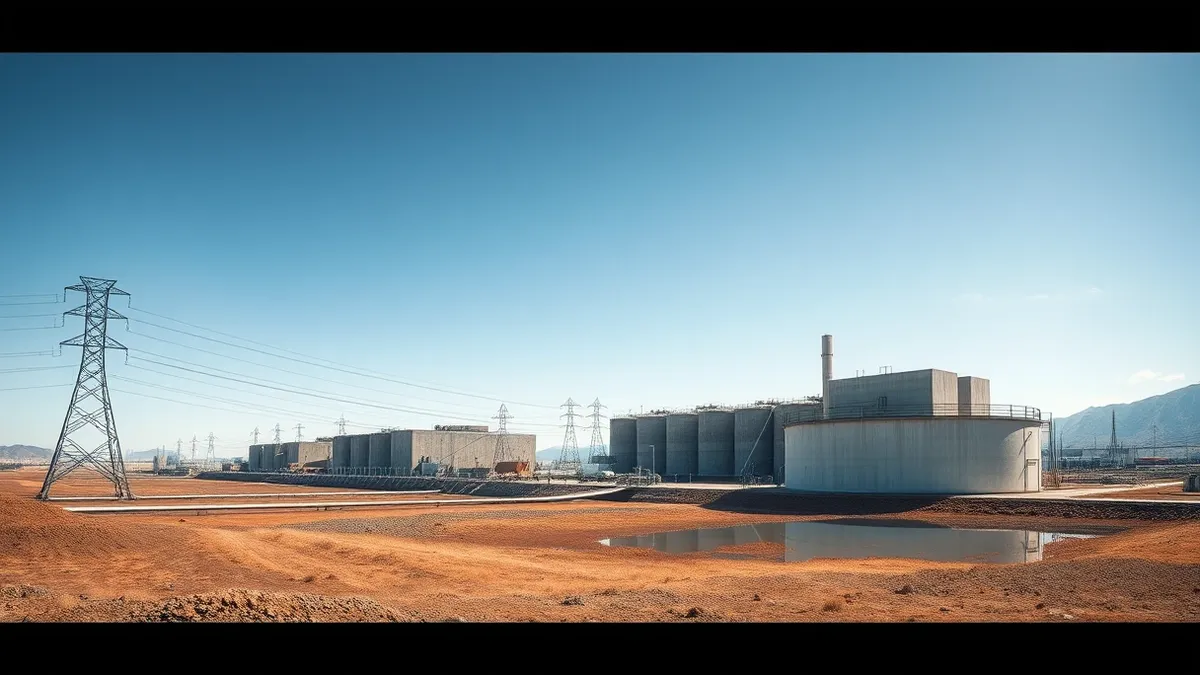
OpenAI has published a National Community Compact and a Compute Campus Policy Blueprint, outlining new commitments regarding its data centre operations. The company states these pledges aim to give communities a voice and protect them from unexpected costs associated with new developments.OpenAI says it will pay for all the extra power grid work needed for its data centres so local bills do not rise.OpenAI’s National Community Compact asserts full financial responsibility for grid interconnection upgrades and prioritises low-water cooling technologies.
The claim
According to the published documents, OpenAI vows not to let its operations increase electricity costs for nearby residents.reported The company claims it will pay the full cost of the power it uses, as well as the infrastructure buildouts and upgrades that power providers need to serve its facilities.company claim This addresses concerns that utilities might pass on expensive upgrade costs to local businesses and households.
Evidence: reported
OpenAI says it will protect local resources and report on the impact of its data centersaifleet-engadget
Evidence: company claim
OpenAI says it will protect local resources and report on the impact of its data centersaifleet-engadget
The response
OpenAI also pledged to protect local resources by developing water plans for communities where it builds facilities. It said it will prioritise closed-loop or low-water cooling, where water circulates in a sealed circuit without being consumed. Additionally, the company promised transparency by publishing water and electricity use for each site and avoiding non-disclosure agreements with public officials.
The bottom line for teams
The announcement comes after Americans voted against data centre expansion in local elections. According to Data Centers on the Ballot, voters approved 39 measures to restrict data centres.reported Several Democrats who criticise AI expansion won seats, proposing federal regulations. OpenAI claims it had been working on these updates for months before the election results emerged.
Evidence: reported
OpenAI says it will protect local resources and report on the impact of its data centersaifleet-engadget
What the paper shows
The material presents OpenAI’s stated policies rather than independent research findings. It details the company’s commitment to cost absorption and resource conservation. The reported results are the publication of the Compact and Blueprint.reported The stated limitations are absent, as the text focuses on pledges. Uncertainty remains regarding whether these commitments will be legally binding or fully implemented by local authorities.
Why it matters
- Model evaluators must consider infrastructure constraints when assessing the scalability of large models, as power and water availability directly impact deployment.
- The pledge to publish site-specific energy and water use provides potential data points for auditing the environmental footprint of AI training and inference.
- Community opposition and proposed federal regulations signal increasing regulatory risk for data centre expansion, which could affect model availability and hosting costs.
- The claim of covering infrastructure costs may influence how utilities and local governments negotiate future data centre permits, altering the operational landscape for AI providers.
Topics: data centers, OpenAI, infrastructure, policy, sustainability
Updated
The strongest doubt
Counterpoint from the sources
Bloomberg reported that OpenAI claimed these updates were planned before the election, casting doubt on whether the timing was purely reactive to voter sentiment.
For readers
Policy
- OpenAI claims it will not sign non-disclosure agreements with public officials regarding its data centre operations.
Investors
- The company pledges to create jobs for local workers and businesses in communities where it builds facilities.
Researchers
- OpenAI stated it will publish water and electricity use for each site, potentially offering data for efficiency analysis.
Ask the article
Local keyword search of this article; no generated answers.Did this article give you the evidence you needed?
Your choice stays on this device. No public tally.Questions readers ask
Will OpenAI pay for grid upgrades?
OpenAI claims it will pay the full cost of infrastructure buildouts and upgrades needed to serve its facilities.
How does OpenAI plan to manage water use?
The company said it will prioritise closed-loop or low-water cooling systems to avoid regularly replenishing water content.
Did the election influence these pledges?
OpenAI claims it had planned these updates before the election, though the pledges were published after voters approved measures to restrict data centres.
Connected stories
Reading receipt
- OpenAI published a National Community Compact and a Compute Campus Policy Blueprint to outline its commitments to local areas.
- The company states it will bear the full cost of electricity and necessary grid infrastructure upgrades for its facilities.
- OpenAI claims it plans to prioritise closed-loop cooling systems to minimise water consumption at its data centre sites.