Key points
- OpenAI framed data centre opposition as a proxy for public unease about affordability and corporate power.
- An MIT Technology Review correspondent contends the backlash is primarily about electricity consumption.
- Average data centres in this part of Virginia have a power capacity of 54 megawatts.
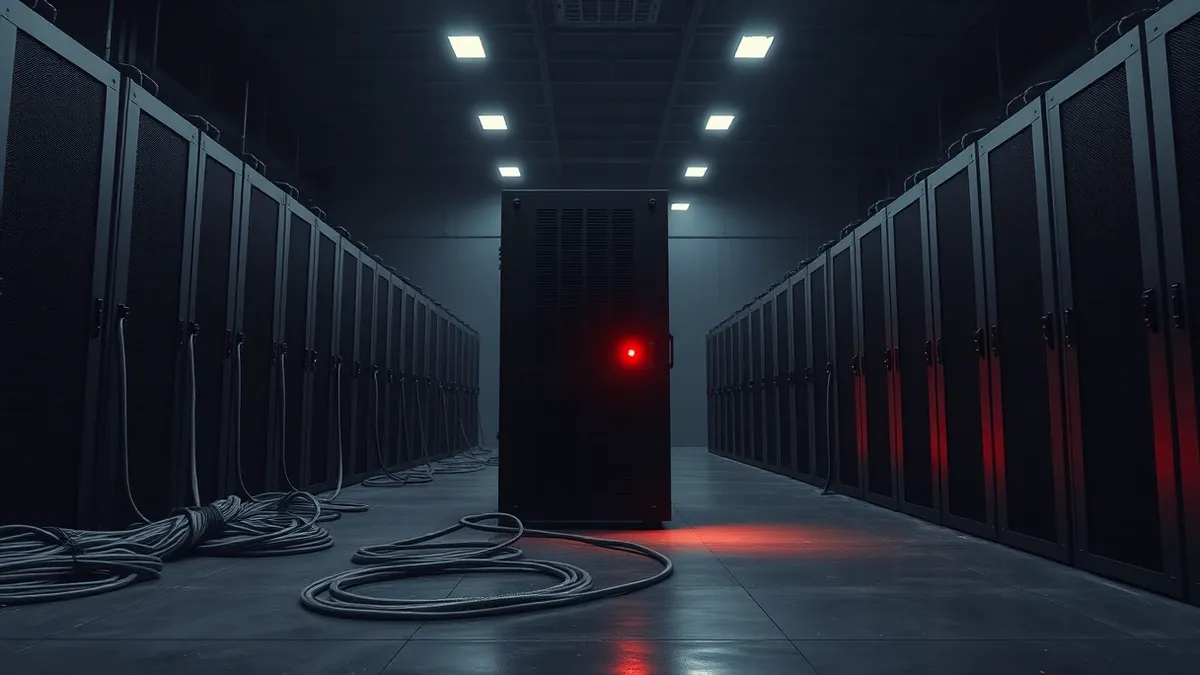
An MIT Technology Review report suggests that public opposition to artificial intelligence infrastructure is rooted in electrical grid capacity rather than the cultural anxieties described by industry leaders.
The claim
OpenAI’s chief global affairs officer, Chris Lehane, wrote that data centres have become a proxy for public unease about affordability, corporate power and people losing control over their futures. This perspective frames the current tension as a culture war involving societal values and economic fairness.
The response
A reporter for MIT Technology Review spent time in Ashburn, Virginia, known as Data Center Alley, and concluded that the industry underestimates the physical reality of power consumption. The correspondent argued that the backlash is fundamentally about electricity supply, not abstract cultural fears.
The bottom line for teams
The dispute centres on whether community resistance is ideological or infrastructural. While tech executives view the pushback as a proxy for wider societal unease, local observers and reporters point to the tangible strain on regional power grids as the primary driver of opposition.
What the paper shows
The report contrasts industry narratives with on-the-ground observations in Loudoun County.
Why it matters
- The data center backlash is driven more by the physical consequences of enormous electricity demand than by the culture war narrative promoted by Big Tech.
- Data centers require massive power capacity, with the average facility in Virginia drawing more electricity than the Denver International Airport.
- Most data centers in established hubs like Loudoun County rely on the existing grid, which often generates electricity from natural gas rather than renewables.
- Local activists argue that the industry’s framing of the issue as a proxy for broader societal unease ignores the core concern over power consumption.
Updated
Did this article give you the evidence you needed?
Your choice stays on this device. No public tally.Reading receipt
- OpenAI framed data centre opposition as a proxy for public unease about affordability and corporate power.
- An MIT Technology Review correspondent contends the backlash is primarily about electricity consumption.
- Average data centres in this part of Virginia have a power capacity of 54 megawatts.