Key points
- Ring Drone Cam ships 27 January 2027 for $249.99, offering 2K video and autonomous indoor flight.
- AI Pilot software uses vision models and cloud processing to map spaces and follow preset patrol routes.
- Flight time is limited to five to eight minutes, requiring frequent returns to the charging dock.
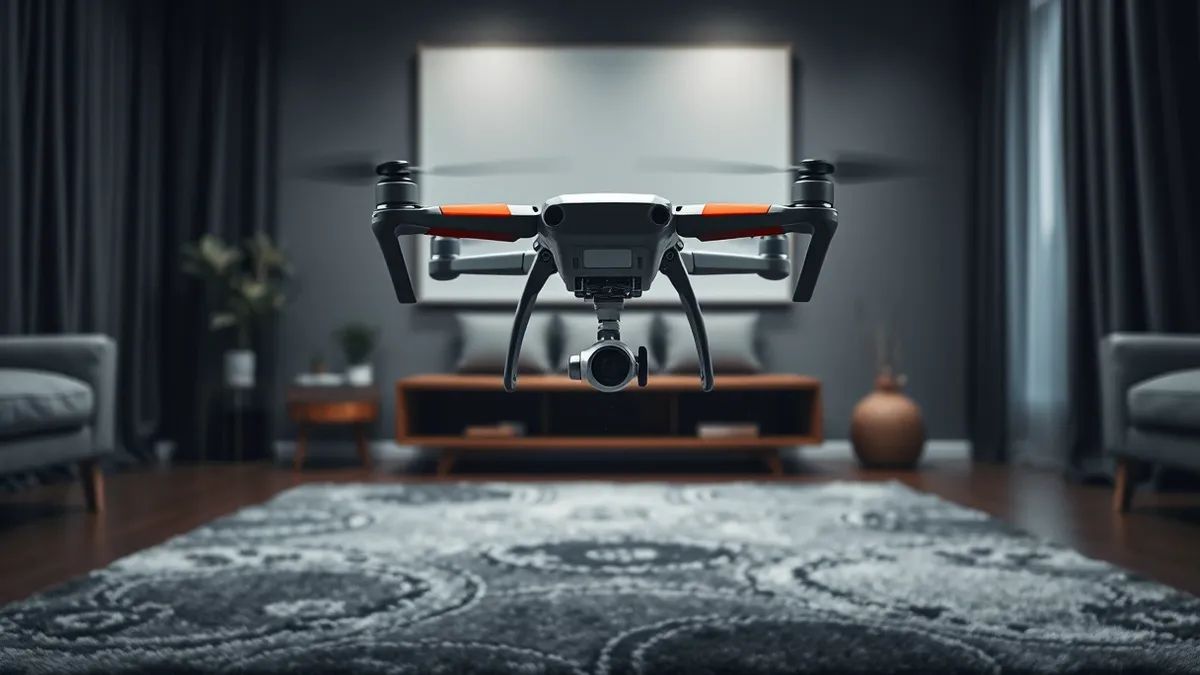
Ring founder Jamie Siminoff announced the Ring Drone Cam at a New York City event, stating it will launch on 27 January 2027 for $249.99, according to the published report This marks the first shipment of a flying indoor camera from the company, arriving nearly six years after the initial Always Home Cam announcement.reported
The facts
The device operates as an autonomous security camera, using Ring’s custom AI Pilot navigation software to move between user-defined patrol points, such as windows or doorways, according to the published report It captures 2K video with a 148-degree field of view and can navigate stairs and multiple rooms.reported Footage is secured by Ring’s TAKE encryption system, which rotates keys every five minutes and deletes server copies after 24 hours.reported
The facts
ZDNet reported significant operational limitations during a hands-on review in New York.reported The drone remains airborne for only five to eight minutes before requiring a recharge at its dock. Additionally, the companion Ring Rover Cam, priced at $999 for businesses, was described as slow and deliberate, making it suitable for routine surveillance rather than rapid incident response.reported
Evidence: reported
Ring’s new drone patrols your home to keep an eye on things – even upstairsaifleet-zdnet
The facts
The hardware relies on finite battery life and pre-programmed paths rather than real-time reactive flight. While the encryption model limits cloud retention, the physical constraints of the drone mean it cannot provide continuous, unrestricted monitoring of large indoor spaces without frequent docking interruptions.
What the paper shows
The research tests the practical application of AI Pilot navigation in residential and commercial settings. Reported results indicate successful autonomous mapping and patrol execution between set points.reported Stated limitations include an eight-minute maximum flight time and the necessity of a fixed charging dock, which restricts the device’s ability to respond dynamically to unexpected events outside its programmed route.
Why it matters
- The TAKE encryption model offers a concrete example of key rotation and data deletion policies for IoT video streams.
- The eight-minute flight constraint highlights the physical limits of current autonomous indoor navigation systems.
- The use of cloud processing for vision models raises questions about data handling despite local key management.
- The distinction between routine patrol and rapid response capabilities informs deployment strategies for physical security.
Topics: Ring, autonomous drones, AI navigation, home security, encryption
Updated
Then / now / next
Ring announced the Always Home Cam in 2020, which never shipped.
The company has launched the Drone Cam with a specific 2027 release date and pricing.
Observers will watch whether the device meets its shipping deadline and how AI Pilot performs in real-world environments.
Story timeline
- Then Ring announced the Always Home Cam in 2020, which never shipped.
- 10 Nov 2026 Hands-on with Ring’s new AI drone camera for your home
- 10 Nov 2026 Ring’s new drone patrols your home to keep an eye on things – even upstairs
- Now The company has launched the Drone Cam with a specific 2027 release date and pricing.
- Next Observers will watch whether the device meets its shipping deadline and how AI Pilot performs in real-world environments.
The strongest doubt
Counterpoint from the sources
ZDNet noted the drone’s short flight time and the Rover Cam’s slow speed, suggesting they are better suited for routine checks than emergency response.
For readers
Consumers
- The drone costs $249.99 and ships in January 2027.
- It films only while flying, with the camera shuttered when docked.
Business
- The Ring Rover Cam costs $999 and patrols autonomously.
- It is designed for routine surveillance rather than rapid incident response.
Researchers
- AI Pilot uses cloud processing and vision models for navigation.
- The system maps interior spaces to move between preset patrol points.
Ask the article
Local keyword search of this article; no generated answers.Did this article give you the evidence you needed?
Your choice stays on this device. No public tally.Terms in this story
AI Pilot
Ring’s custom navigation software using vision models and cloud processing to map interior spaces.
TAKE encryption
A system that rotates encryption keys every five minutes and deletes server copies after 24 hours.
Patrol points
Predesignated locations, such as windows or doors, that the drone visits during its route.
Questions readers ask
When will the Ring Drone Cam be available for purchase?
It is scheduled to arrive on 27 January 2027, according to Ring founder Jamie Siminoff.
How long can the drone fly on a single charge?
ZDNet reports a flight time of five to eight minutes before it must return to dock.
What encryption system does the device use for video footage?
It uses Ring’s TAKE system, which rotates keys every five minutes and deletes copies after 24 hours.
Connected stories
Reading receipt
- Ring Drone Cam ships 27 January 2027 for $249.99, offering 2K video and autonomous indoor flight.
- AI Pilot software uses vision models and cloud processing to map spaces and follow preset patrol routes.
- Flight time is limited to five to eight minutes, requiring frequent returns to the charging dock.
Still open: How accurately does AI Pilot navigate complex or changing indoor environments?
Still open: Will the TAKE encryption system maintain its 24-hour deletion policy in all regions?